Assistant Professor
Center for Neurologic Diseases
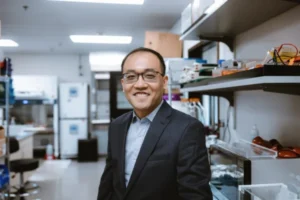
Aging is a mystery that has driven human curiosity since the dawn of history. Modern research is revealing the underlying molecular mechanisms that shed light on this ancient question. I’m interested in understanding how aging leads to diseases that are often difficult to treat, such as Alzheimer’s and cancer, and importantly, how we can intervene in this inevitable trajectory of life by targeting the underlying mechanisms.
We use two major approaches to identify interventions. First, we aim to understand how the epigenetic information and its defined cellular identity are maintained over the lifetime. In response to cellular stress or damage, the epigenome undergoes massive changes to modulate cell signaling, repair damage and facilitate tissue regeneration.
However, such epigenetic changes cannot be fully restored, leading to drift in cell-state as observed in old cells. My lab aims to elucidate the epigenetic maintenance mechanisms that safeguard stability and cell identity, which we can use to develop interventions to slow down aging.
Second, we want to reverse functional loss and disease caused by aging. We and others have developed different regimens of a cellular rejuvenation strategy called epigenetic reprogramming. We have found that when applied in the brain, epigenetic reprogramming improves learning and memory in old mice and mice with Alzheimer’s disease. My goal is to understand how reprogramming works to rejuvenate cellular function and to develop next-generation reprogramming strategies.