
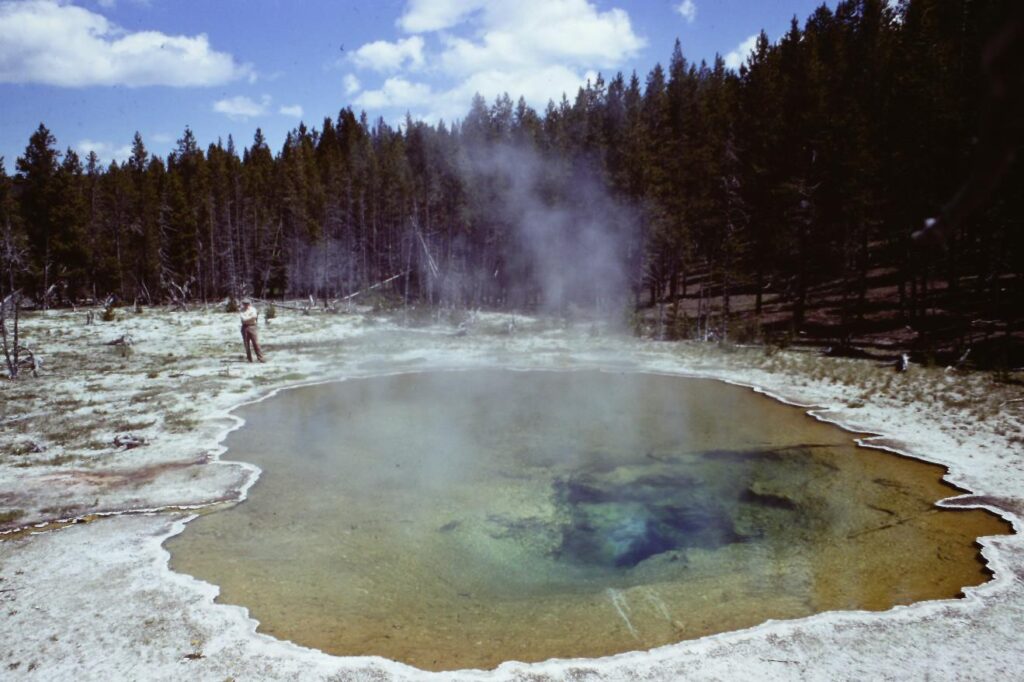
In the early 1960s, an Indiana State University microbiologist named Thomas Brock (1926-2021) and his undergraduate assistant Hudson Freeze set about understanding the life lurking within the hot springs of Yellowstone National Park — hydrothermal pools whose surface waters can exceed 200 degrees Fahrenheit but which appeared to abound with untold numbers of unknown species of heat-loving microorganisms.
“I’d never seen Yellowstone before,” Brock said in a 2017 interview. “I came in the (park’s) south entrance, got out of my car and there were all these thermal areas spreading out from the hot springs into the lake. I was stunned by the microbes that were living in the hot springs, and nobody seemed to know anything about them.”
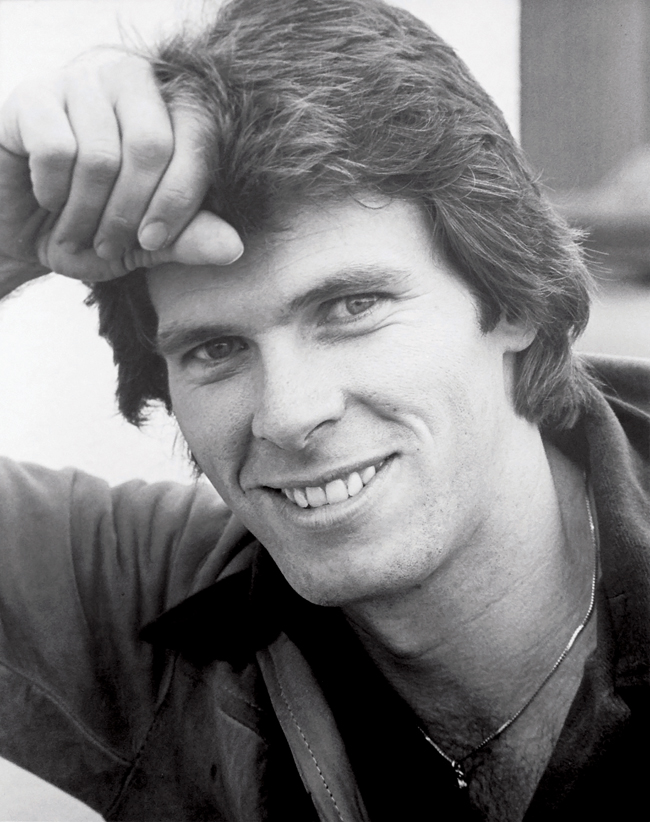
In the summer of 1966 while living in a cabin on the edge of the park, Freeze made daily treks to collect water samples, then return to the lab to scrutinize their contents for microscopic life. From a sample taken from Mushroom Spring, Freeze discovered yellowish microbes thriving in water that was 160 degrees F.
“I was seeing something that nobody had ever seen before,” recalled Freeze, now William W. Ruch Distinguished Endowed Chair and director of the Sanford Children’s Health Research Center at Sanford Burnham Prebys Medical Discovery Institute. “I still get goosebumps when I remember looking into the microscope.”
In 1969, Brock and Freeze would publish a paper in the Journal of Bacteriology describing the new, heat-loving bacterium, dubbed Thermus aquaticus. A year later, they isolated an enzyme from T. aquaticus that performed sugar metabolism at an optimal temperature of 203 degrees F, just below boiling.
Their findings spurred others to probe the secrets of T. aquaticus and its ilk, leading to the discovery in 1976 by University of Cincinnati scientists of another enzyme — a DNA polymerase — that could synthesize (make) new DNA at 176 degrees F.
That second enzyme, called Taq polymerase, would provide American biochemist Kary Mullis with the critical tool to create polymerase chain reaction (PCR) — a method for rapidly creating millions to billions of copies of a single fragment of DNA. To break DNA molecules apart requires high temperatures: Taq worked at high temperatures.
PCR has profoundly changed biomedical research and science. It is broadly used in laboratories to detect the genetic material of viruses, bacteria and other pathogens, even when only small amounts are present. It is used for genetic testing and diagnostics. In cancer research, PCR can help identify gene mutations, and is used in both biopsies and treatment monitoring. And in forensic science, it can amplify DNA from tiny samples to help with identification and crime-solving.
Mullis would share the 1993 Nobel Prize in Chemistry for inventing PCR. The journal Nature would declare the work of Brock and Freeze to be one of “seven basic science discoveries that changed the world.”

From Yellowstone and thermal microbes, Freeze moved on to new challenges. At Sanford Burnham Prebys, he focuses on the consequences of faulty glycosylation, a biochemical process in which chains of carbohydrates called glycans are attached to proteins or lipids to create glycoproteins and glycolipids.
These new molecules have a wide range of functions, from cell signaling to modulating protein folding to influencing immune response. Errors can lead to congenital disorders of glycosylation or CDGs, a large group of genetic and metabolic disorders that appear in infancy and childhood.
Though considered rare, the mortality rate of CDGs can be high, particularly in the first year of life. In PMM2-CDG, the most common CDG disorder, the mortality rate is roughly 20 percent due to multiple organ failure, severe infections and other causes.
Freeze is considered one of the nation’s leading experts on the topic.