
In medicine and science, no progress can be made without measurement.
Scientists need to be able to quantify the targets of their research; doctors need to do the same in order to detect and diagnose disease.
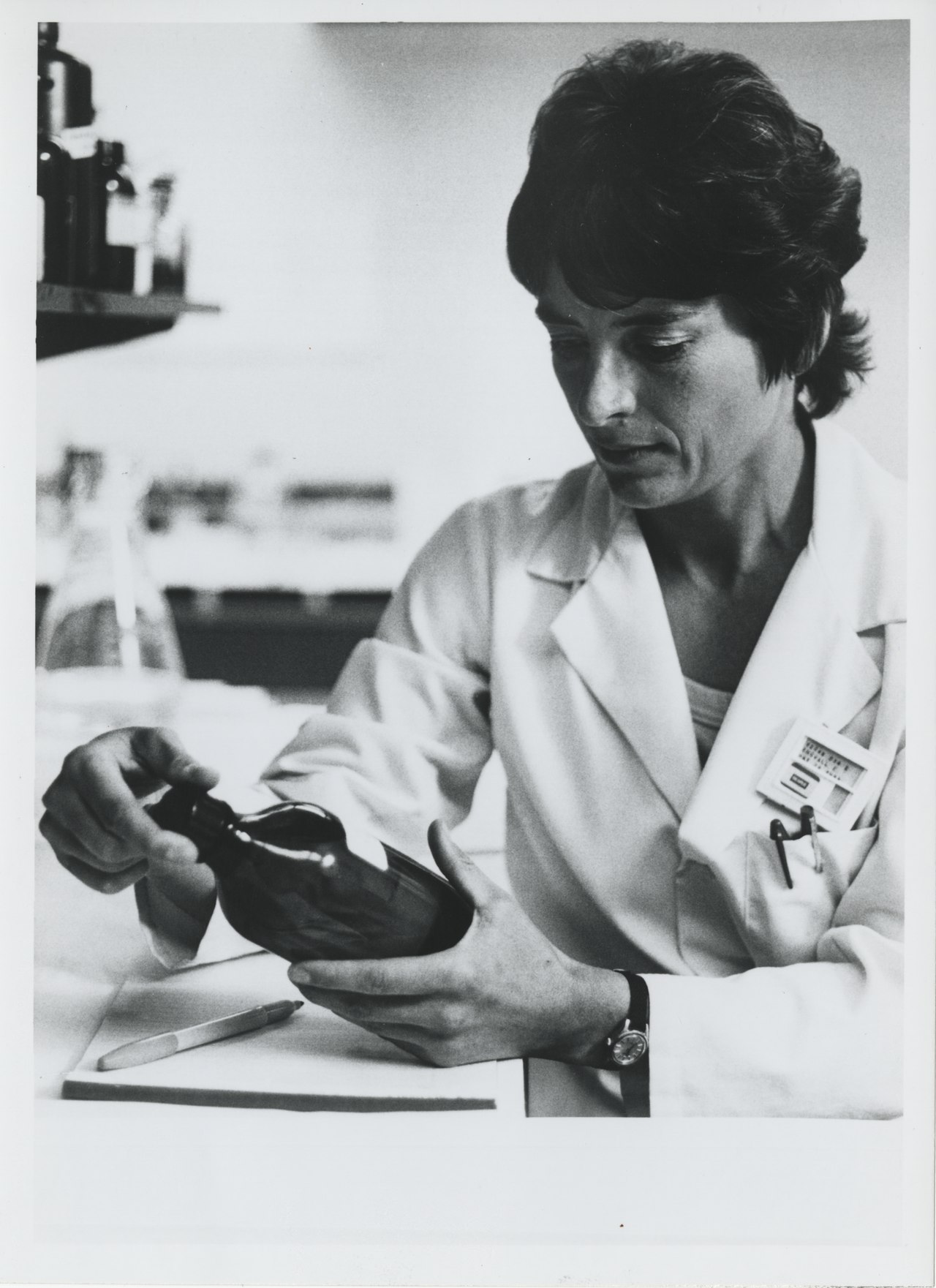
In 1971, Eva Engvall, PhD, and colleague Peter Perlmann (1919-2005) at Stockholm University published a landmark paper describing their ELISA test, an acronym for Enzyme-Linked Immunosorbent Assay.
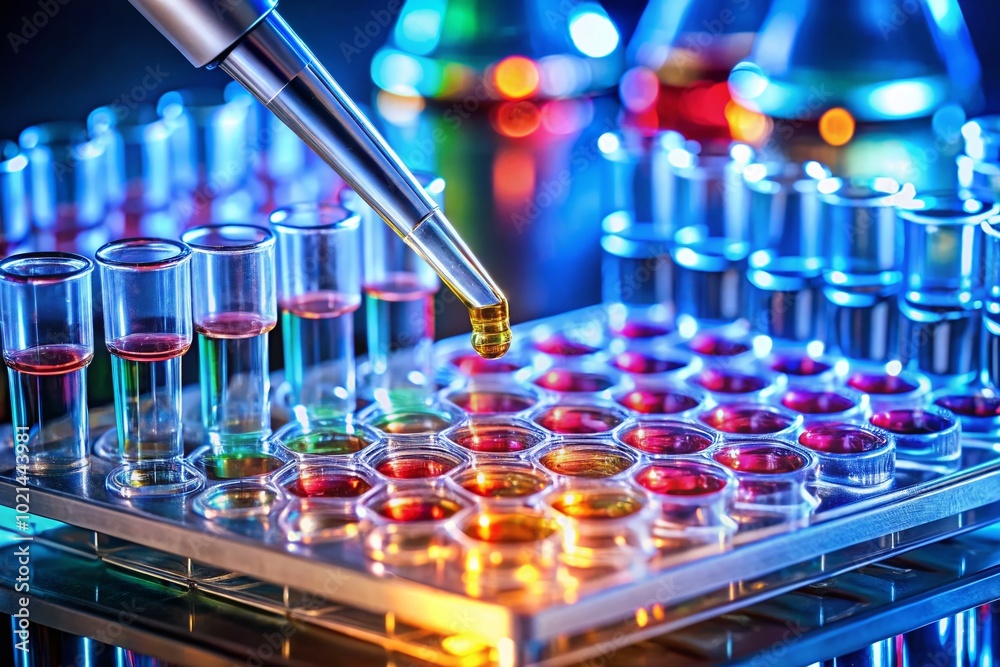
The test was a laboratory technique that detected certain antibodies, antigens, proteins and hormones in bodily fluids. It was a highly versatile clinical and research tool, a marked improvement over the existing immunoassay technology, which used radioactively labeled antigens or antibodies.
ELISA was simpler, more selective and highly sensitive.
- It could detect evidence of a wide range of diseases, including HIV, Lyme and COVID.
- It could be used for pregnancy detection.
- It could identify specific allergens in a sample, aiding diagnosis and management of allergies.
- It could be used to screen donated blood and organs for infectious agents.
- It could detect specific protein markers in blood associated with certain cancers.
- It could be used to measure levels of targeted drugs in the body for optimal dosage, evaluate immune response to vaccines and identify biomarkers for early disease detection.
Following its debut, ELISA was almost immediately used to identify the presence of trichinosis in parasitology and to diagnose malaria. Researchers soon used the test to identify infections caused by influenza and mumps viruses and modified it to identify concentrations of different hormones, peptides and proteins. A version of ELISA is used to perform the prostate-specific antigen (PSA) test, a widely used blood test to detect prostate cancer.
Over the years, the ELISA test has been expanded, diversified, refined and improved. Though it has been superseded in some cases by newer technologies and approaches, it remains a common and critical tool in labs and clinics.
In 1979, Engvall moved to Sanford Burnham Prebys Medical Discovery Institute (then the La Jolla Cancer Research Foundation). At Sanford Burnham Prebys, she developed a new form of the test called “two-site ELISA” to measure the then-new phenomenon of monoclonal antibodies — laboratory-produced proteins that mimic natural antibodies and have been developed into a wide range of applications, including treatments for cancer, infectious diseases and autoimmune disorders.
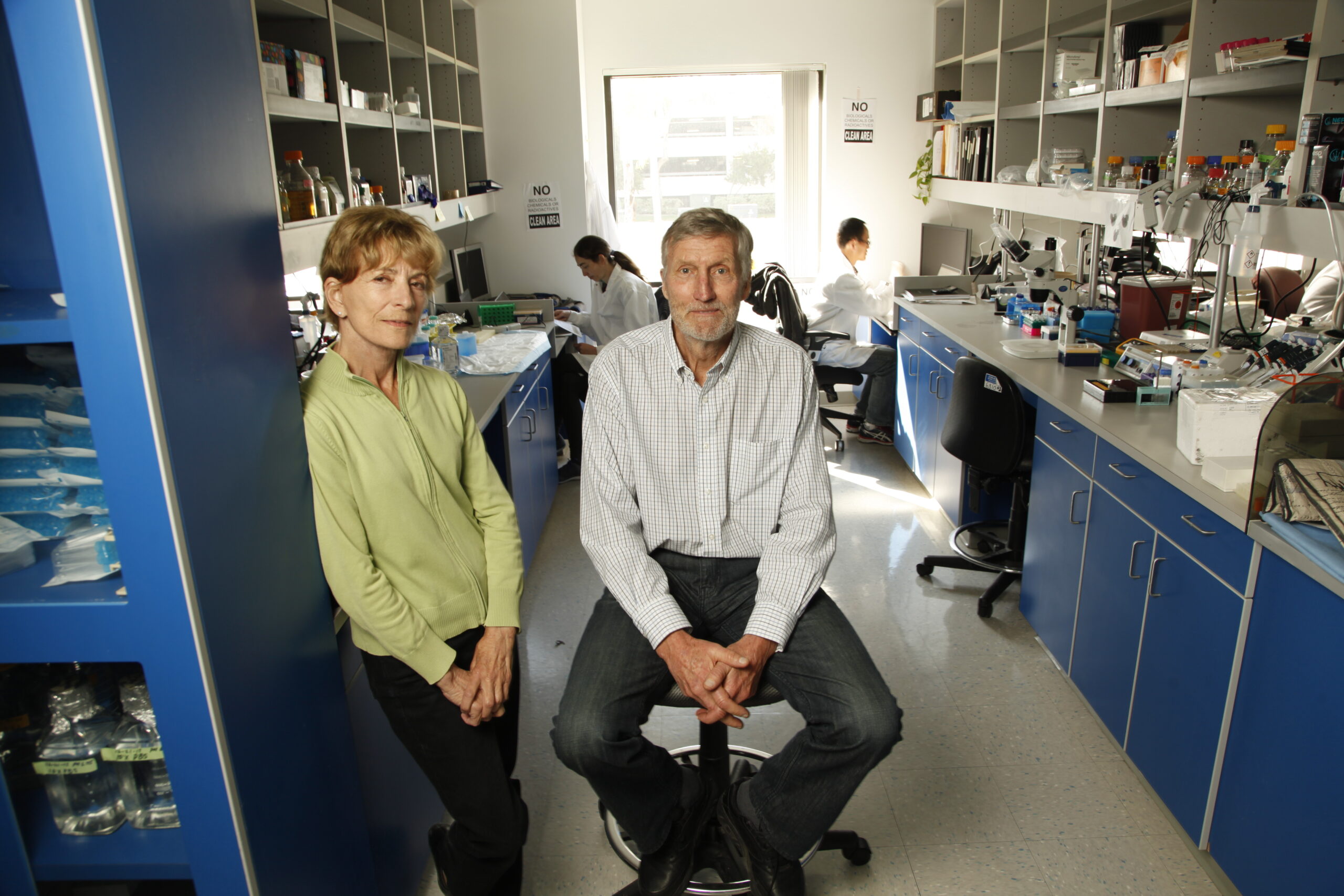
Engvall subsequently turned her attention to the biochemistry of the extracellular matrix (ECM), the research focus of her husband Erkki Ruoslahti. She discovered the affinity of fibronectin (a protein co-discovered by Ruoslahti) to gelatin or denatured collagen, and devised a process to purify fibronectin using gelatin affinity chromatography, enabling numerous advances in fibronectin research.
With colleagues, Engvall also discovered the second member of the laminin family of matrix proteins, and showed that mutations in the protein (merosin), which is found in the placenta, striated muscle and peripheral nerves, are the cause of the second most common form of muscular dystrophy.
In 1986, Engvall and colleagues also described a new connective tissue glycoprotein they dubbed fibrillin. Found in the ECM, fibrillin plays a crucial role in the structural integrity and elasticity of connective tissues throughout the body.
Mutations in the FBN1 gene that encodes for fibrillin can lead to a group of connective tissue disorders known as fibrillopathies, such as Marfan syndrome. People with the syndrome are often disproportionately tall and thin, with exceptionally flexible joints and abnormally curved spines. Lungs, eyes and bones are commonly affected; in severe cases, there can be cardiovascular complications.
The FBN1 gene and fibrillin have become important therapeutic targets, both pharmaceutical and gene and antibody therapies.